Hire a senior NestJS developer
I've written NestJS services since 2019, starting with UptimeRobot's checks and alerting. In my current role I built a NestJS and Socket.io backend that keeps more than 100,000 devices connected at once, then helped split the monolith behind it into NestJS services, which cut p95 latency by about 40%. I take fixed-scope builds or join your team a few days a week.
Concurrent connections
A device platform on NestJS, Socket.io and MongoDB.
p95 latency
After splitting a monolith into NestJS services on Kubernetes.
Users at UptimeRobot
Node.js and NestJS services running millions of website checks a day.
Active customers
NestJS services and booking flows at SweepSouth.
What I build with NestJS
A real-time platform or SaaS usually takes 4 to 8 weeks from spec to production.
Real-time backends
Socket.io gateways that survive reconnect storms, with a queue behind them so a slow consumer delays a message instead of losing it.
APIs that clients like
REST or schema-first GraphQL. At UptimeRobot the GraphQL API cut client network overhead by about 35%.
Monolith to services
Splitting along the slow paths, on Docker and Kubernetes (AWS EKS), with CI/CD in Jenkins or GitHub Actions.
Queues and background work
Retry, deduplication and idempotency keys, like the alerting pipeline I built on AWS ECS and Lambda.
Existing codebases
Most of my work has been inside codebases someone else started. I read first, profile second, and change the boring parts that are slow.
Full-stack when needed
Next.js or React on the front, plus Angular and Vue from SweepSouth and Schoolver, so one person owns the contract between the two.
Case studies
The engineering behind the numbers above. Products under NDA are described without internals.
Real-time device platform
A device management backend that keeps 100,000+ devices connected at once. The product is under NDA, so this page covers the engineering, not the product.
Read case studyUptimeRobot
Website monitoring for 2.1M+ users: Node.js services running millions of checks a day and a schema-first GraphQL API.
Read case studySweepSouth
Africa's largest on-demand home-services platform: NestJS services and booking flows for 100k+ active customers.
Read case studyHow I think about this work
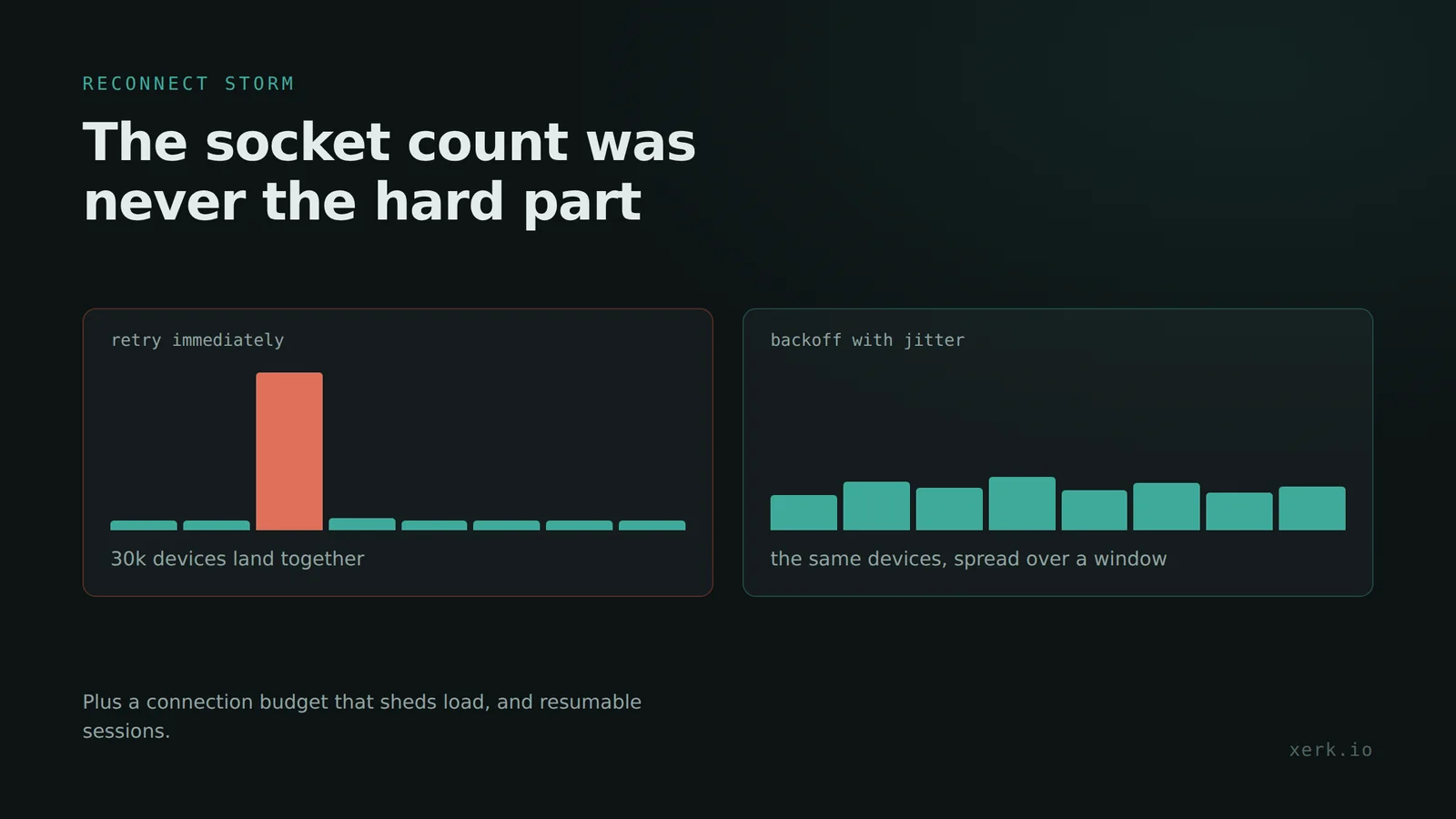
Scaling 100k WebSocket connections: the reconnect storm
At 100k+ concurrent sockets the count is easy. The reconnect storm is what breaks, and jittered backoff, load shedding and resumable sessions fix it.
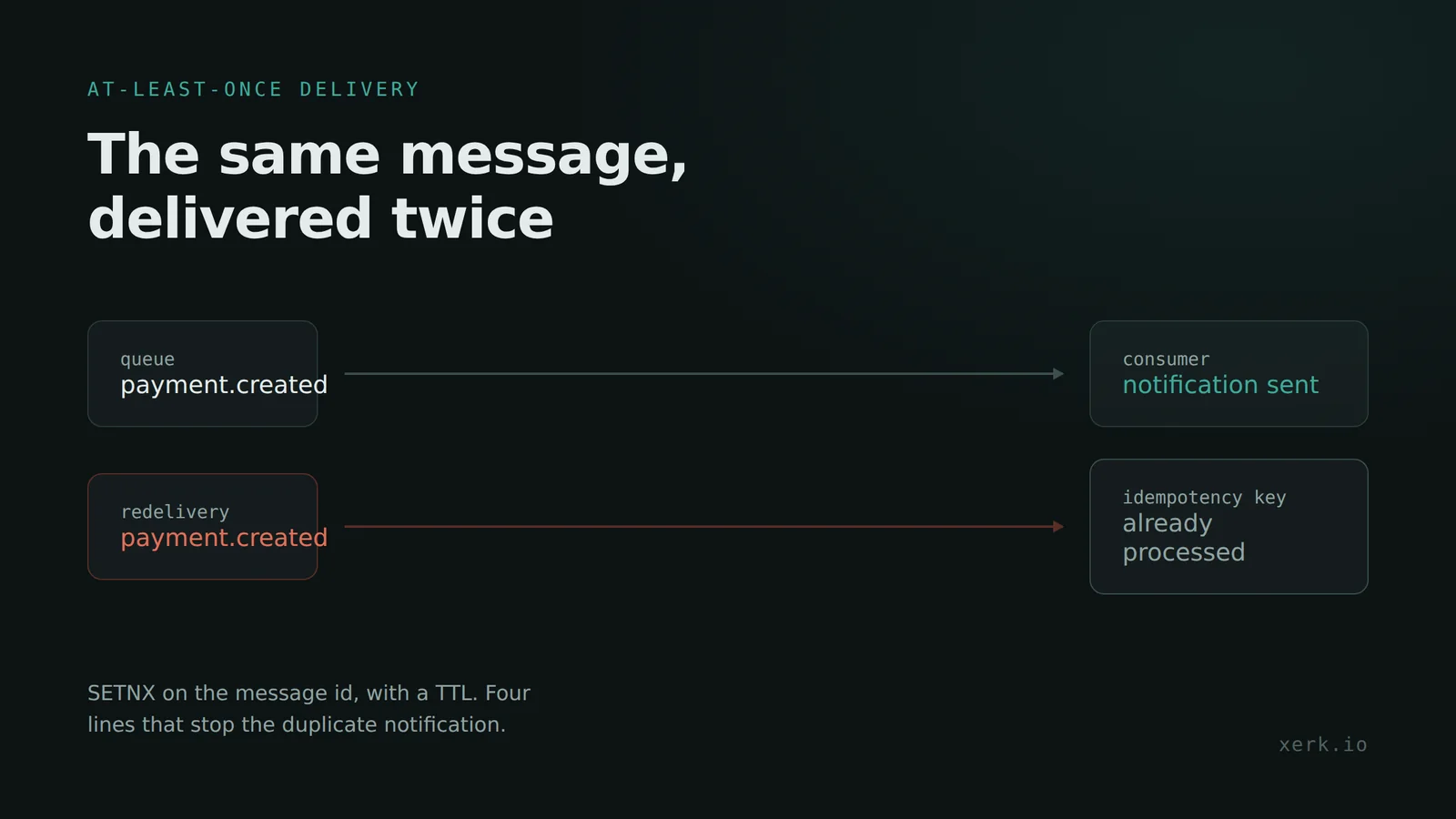
At-least-once delivery means at least once
Every queue consumer eventually runs twice. Give each one an idempotency key from the message and check it before doing the work.
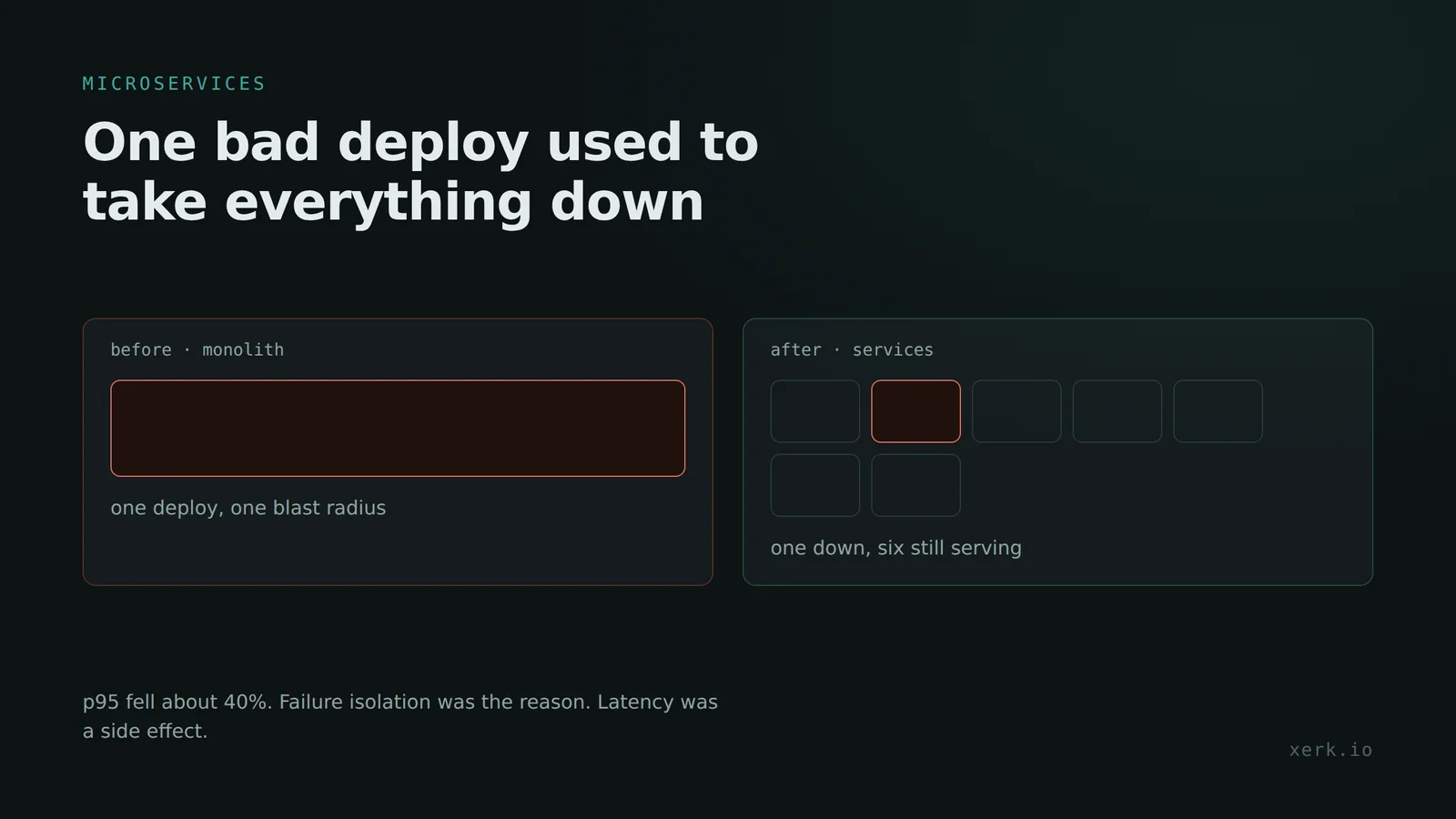
Splitting a monolith: what it actually bought us
Split a monolith for failure isolation and team ownership. If speed is the goal, profile first; the cause is usually a missing index.
From first call to launch
- 01Day 0
Intro call
15 minutes on what you are building and by when.
- 02Day 2
Scope & quote
A written plan with milestones and a fixed price.
- 03Weekly
Build in the open
Weekly demos, a staging link and async updates.
- 04Final week
Launch & handover
Deploy, docs and a recorded walkthrough.
Questions clients ask
Can you take over an existing NestJS codebase?
Have you scaled NestJS WebSockets in production?
Do you also build the frontend?
Which databases do you use with NestJS?
How do we work together?
Tell me what you're building
I'm Ahmed Mamdouh, a senior full-stack and AI engineer in Cairo, Egypt. I reply within one working day.
Looking for something else? See all the ways to work together or ai agent developer.